


In Spirit and in Truth
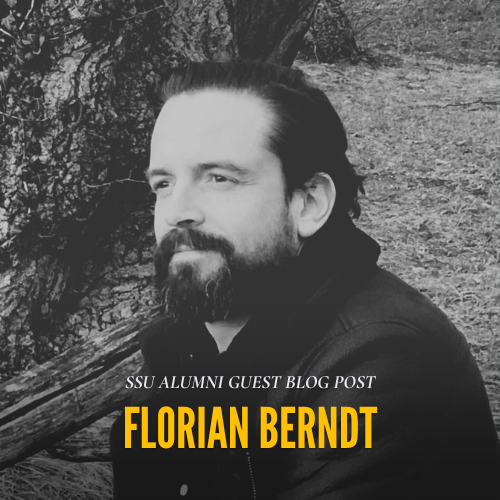
by Florian H. Berndt
Growing up in a patchwork family with multiple parents and siblings, in a culture less than accommodating since my paternal grandparents arrived as refugees in the South of Germany after WWII, music and writing had always helped me to express my inner conflicts of living in a broken world.
So, when I picked up my first instrument shortly after encountering the love of Jesus, my writing and music were soon transformed from tools to express my pain to ways to express my newfound gratefulness and joy. Hours would sometimes fly by as I worshipped on my own, either in my room or out in nature.
Thus, walking the edge between the desire to express my heart’s longing for healing and wholeness and lamenting the brokenness I witnessed all around me became an integral part of my spiritual journey early on. Sadly, this inner conflict often put me at odds with the faith communities I got involved with.
Even though we later gained a reputation as prophetic psalmists in our circles, the toxic positivity and commercializing of a beautiful gift on the one hand and the tight squeezed eyes and clenched fists of revivalism with its fire-and-brimstone messages on the other, left me disillusioned.
After a mystical experience of the all-loving Abba heart of God in the late 1990s, I went cold turkey straight into a religious detox over the course of a few weeks. There was just no going back from there, which ultimately led to us leaving behind everything we had known up to this point.
Coming Full Circle
Looking back over the 20+ years of losing my religion, I’ve noticed how in many ways I’ve come full circle, not unlike “the hero’s journey” as outlined by Joseph Campbell (1). This is a theme I believe to be integral to the spiritual journey and that repeatedly impacted my imagination via dreams and visionary experiences (2).
No longer being plagued by violent God-images, as expressed in doctrines like penal substitution, infernalist notions of judgement and the accompanying fear of hopeless abandonment, I find my heart slowly coming back to a place of genuine worship again, including through music and writing.
I’m beginning to realize what Jesus meant by His Abba (3) seeking worshippers in Spirit and in truth and why the prophets repeatedly cry out against honoring God with our lips, while our heart is far from loving Him and our neighbor (4). Unlike the striving of Baal’s prophets (5), true worship responds to Abba’s love (6).
True worship flows from the heart, is loving devotion (7). But it is impossible to love someone from a pure heart and be afraid of, or even resent them (8). Further, we become like that which we worship (9). Hence, the intrinsic link between worship and beholding in Scripture (10).
From what I gather most worship songs don’t reflect the toxic theologies we grew up with. This leaves me hopeful, especially if it is true that the experience of the worshipping community influences the way we think about God more than our preconceived doctrines (11).
Yes, there is also cognitive dissonance at work, but coming full circle, I am finally learning to hold the pain and the joy, the grief and the gratefulness together in Abba’s love, while moving from the tree of the knowledge of good and evil towards the tree of life, where alone true worship is possible (12).
I obviously mean more than just singing songs, but to rest in whatever situation, forgiving others and myself, grieving the suffering, raging against evil, hoping for all, acknowledging my utter dependence, and to revel in the beauty of creation and the messiness of life – to make love my great aim (13).
This is exactly what I see in the life of Jesus, Who, by trusting His Abba did not despise the shame of the cross for the joy that was set before Him, as He was birthing a new creation into being (14). By sharing in our suffering, He is able to share with us His joy – no denial, no blame, no self-pity, no triumphalism (15).
Everyone made whole, victims being restored, perpetrators being confronted and forgiven, healing, reconciliation – every tear wiped away (16) – that is the hope of the Gospel (17). The vision of Jesus and the prophets, Abba’s vision (18). And that vision inspires worship in Spirit and in truth in a way that our idols never can (19).
Psalm 22
1 My God, my God, why have you forsaken me?
Why are you so far from saving me,
so far from my cries of anguish?
2 My God, I cry out by day, but you do not answer,
by night, but I find no rest.
3 Yet you are enthroned as the Holy One;
you are the one Israel praises.
4 In you our ancestors put their trust;
they trusted and you delivered them.
5 To you they cried out and were saved;
in you they trusted and were not put to shame.
6 But I am a worm and not a man,
scorned by everyone, despised by the people.
7 All who see me mock me;
they hurl insults, shaking their heads.
8 “He trusts in the Lord,” they say,
“let the Lord rescue him. Let him deliver him,
since he delights in him.”
9 Yet you brought me out of the womb;
you made me trust in you, even at my mother’s breast.
10 From birth I was cast on you;
from my mother’s womb you have been my God.
11 Do not be far from me,
for trouble is near
and there is no one to help.
12 Many bulls surround me;
strong bulls of Bashan encircle me.
13 Roaring lions that tear their prey
open their mouths wide against me.
14 I am poured out like water,
and all my bones are out of joint.
My heart has turned to wax;
it has melted within me.
15 My mouth is dried up like a potsherd,
and my tongue sticks to the roof of my mouth;
you lay me in the dust of death.
16 Dogs surround me,
a pack of villains encircles me;
they pierce my hands and my feet.
17 All my bones are on display;
people stare and gloat over me.
18 They divide my clothes among them
and cast lots for my garment.
19 But you, Lord, do not be far from me.
You are my strength; come quickly to help me.
20 Deliver me from the sword,
my precious life from the power of the dogs.
21 Rescue me from the mouth of the lions;
save me from the horns of the wild oxen.
22 I will declare your name to my people;
in the assembly I will praise you.
23 You who fear the Lord, praise him!
All you descendants of Jacob, honor him!
Revere him, all you descendants of Israel!
24 For he has not despised or scorned
the suffering of the afflicted one;
he has not hidden his face from him
but has listened to his cry for help.
25 From you comes the theme of my praise in the great assembly;
before those who fear you I will fulfil my vows.
26 The poor will eat and be satisfied;
those who seek the Lord will praise him
may your hearts live forever!
27 All the ends of the earth
will remember and turn to the Lord,
and all the families of the nations
will bow down before him,
28 for dominion belongs to the Lord
and he rules over the nations.
29 All the rich of the earth will feast and worship;
all who go down to the dust will kneel before him
those who cannot keep themselves alive.
30 Posterity will serve him;
future generations will be told about the Lord.
31 They will proclaim his righteousness,
declaring to a people yet unborn: He has done it!
Joseph Campbell, The Hero’s Journey: Joseph Campbell on His Life and Work (The Collected Works of Joseph Campbell), (New York, NY, USA: Joseph Campbell Foundation, 1990).
Don Milam, The Ancient Language of Eden: Rediscovering the Original Language of Jesus: Love, Grace, and Mercy, (Shippensburg, PA, USA: Destiny Image Publishers, 2014), 167.
It is interesting to note how the author of John’s Gospel portrays Jesus, introducing God as Abba and explaining His understanding of worship, both for the first time in his account – and all to a rejected outsider.
Isaiah 29:13; Ezekiel 33:31; Amos 5:23; Matthew 15:7–9; 22:37-40; John 4:23; 1. Corinthians 13.
1. Kings 18:28.
John 15:9-10; 1 John 4:19.
Proverbs 4:23; John 7:38.
Matthew 5:8; James 1:8.
Andrew Newberg and Mark Robert Waldmann, How God Changes Your Brain: Breakthrough Findings from a Leading Neuroscientist, (New York, NY, USA: Ballantine Books, 2009).
Romans 12:1-2; 2. Corinthians 3:18; 1. John 3:1-2.
Bradley Jersak, Her Gates Will Never Be Shut. Hope, Hell, and the New Jerusalem, (Eugene, Oregon, USA: Wipf & Stock, 2009), 144-145.
Genesis 2:9; Proverbs 13:12; Ephesians 4:17.
1. Corinthians 14:1.
Matthew 26:39; John 16:21, 32; Hebrews 12:2; 2 Corinthians 5:17.
John 14:27; 15:11; 17:26; 2. Corinthians 1:3-5; Hebrews 4:15.
Revelation 21:4.
Jürgen Moltmann, “The Final Judgment: Sunrise of Christ’s Liberating Justice,” in Compassionate Eschatology: The Future as Friend, eds. Ted Grimsrud and Michael Hardin, (Eugene, OR, USA: Cascade Books, 2011), 218-229.
Bradley Jersak, A More Christlike Way, A More Beautiful Faith, (Pasadena, California, USA: Plain Truth Ministries, 2019), 237-247.
1. John 5:21.
Florian H. Berndt was born and raised in Southern Germany, just across the border from the Swiss town of Basel. Originally from a Roman Catholic background, he first consciously experienced the reality of the Gospel in his youth, during a very late offshoot of the Jesus People Movement. Over the years, he has been involved in a variety of ministry capacities, ministering mostly to those on the margins of society. In 2010, he founded Fatherheart Ministries in Germany, which he handed over to a new leadership in 2020 to start Divine Embrace Ministries & Publications, as well as the Perichoresis DACH Network, which he still oversees, and is the co-founder of the Abba Calling community, teaching people how to actively practice listening prayer. Having just recently given up his role as pastoral care worker for an Anglican community, he now works as Consultant for Corporate Communications and Diversity Management for a Roman Catholic charity that provides care to the elderly and people with mental and physical disabilities. Florian and his wife Clare just celebrated their 25th wedding anniversary, and presently reside together with their two teenage children and Harvey, the chocolate Labrador, in Riehen, Switzerland, after having sold their home that served as a meeting place for an intentional community in Germany in 2024. He earned his B. A. (Hons.) in Theology from the London School of Theology and Middlesex University in 2018, and graduated from SSU with an M. A. in Theology & Culture in 2023.