


A School of Unlearning
Updated: Jan 13
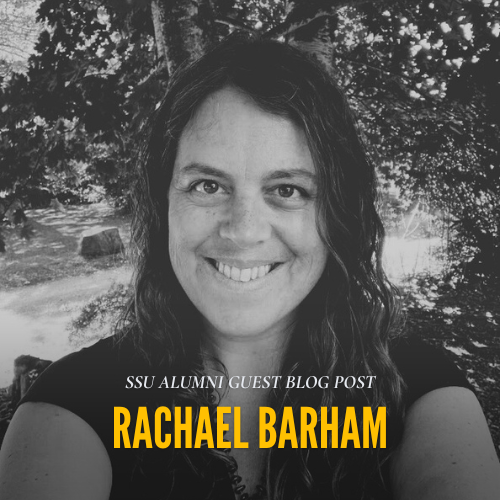
by. Rachael Barham
“I wonder if there is a school of unlearning?”
I love this question. Firstly, because it playfully suggests the crucial role of unlearning in any serious endeavour of learning; and also, because in my imagination this question will forever be spoken by a curious young boy to his wise little, cake-loving mole friend…

It was early 2021, Covid restrictions lingered like a bad dream, and in the undergraduate program at St. Stephen’s University, the student body was small but engaged, content to start the semester online but longing to study in person again. I was excited to be teaching a new Religious Studies course called “Spiritual Practices and Our Common Humanity,” and a couple of weeks in, I couldn’t refrain from sharing some pages of Charlie Mackesy’s wonderful book, The Boy, the Mole, the Fox and the Horse with my class. Like much of the pandemic-shaken world, we were delighted and comforted by the book’s simple message of kindness, love, and friendship. We began to read and discuss a few golden nuggets of wisdom at the start of each online lesson, but it wasn’t too long before we were gratefully gathering in a physical classroom, and I was turning the book around for them to enjoy its whimsical illustrations. (I firmly believe we are never too old for picture book story time!) This spontaneous ritual became an unexpectedly fundamental aspect of the course and subtly flavoured our explorations. When, one day, we came upon the boy’s question about the possibility of a school of unlearning, it had a deep resonance with what we were up to together.
Together we were unlearning the isolating, constrictive idea that there is “one right way” to be spiritual, and instead exploring spirituality as an innate and evolving characteristic of humanity, which may or may not be expressed through a religious tradition. The students - coming from a variety of religious backgrounds or none to speak of - were relieved to consider that they might already, unknowingly, have spiritual practices: regular activities that uniquely and naturally expressed for them a multi-layered sense of connectedness and meaning in life. They were also eager to learn about and experience new-to-them, though often ancient, spiritual practices that created connection points with “our common humanity” in its beautifully diverse manifestations. As the semester progressed and our shared trust and vulnerability grew, I realized that they were especially hungry for practices that helped them to grow in self-compassion, self-awareness, and self-acceptance.
In this hunger, too, we were accompanied by the gentle teachers within our picture book. Directly before the boy posits to the mole a school of unlearning, he raises another poignant question. Perching together on a comfortably curving branch, the boy asks his wise friend: “What is the biggest waste of time?” Without hesitation, the mole responds: “Comparing yourself to others.” It was clear from our honest sharing in class that comparing ourselves to others - and either finding ourselves wanting or believing ourselves superior - was an inner habit that caused us all suffering, and that we were attempting to unlearn together. It seemed that in the process of unlearning inherited ideas about “the right way” to be spiritual, we were also unlearning deep-seated beliefs about “the right way” to be human, which in practice means an illusive “right” or ideal way to be ourselves.

In the “graduate school of theology, peace and reconciliation” that SSU has since become, I see students engaging in similar kinds of unlearning. Like the “child’s way” to which Jesus invites or the Buddhist concept of “beginner’s mind,” unlearning is a process that requires much courage, curiosity, humility, and trust, a path that is resonant with a Scripture from this season of Advent: “A little child will lead them.” I am constantly in awe of the large-hearted, open-minded humans who gather online and in person with a brave willingness to ask their real questions, to listen to and learn from each other’s diverse insights and experiences, and for their studies to be a transformative, whole-person process of “becoming” rather than mere information accumulation. I have the privilege of witnessing and participating in the honest, communal exploration and generous self-sharing that occur among cohort after cohort. Each time, the resulting spiritual liberation, unguarded connectedness, and heartbroken longing to make a difference are sacred and miraculous. Each time it becomes clearer and clearer to me that a lot of unlearning happens beyond our awareness, and that our relationships with each other are where much of it unfolds. Yes, our unlearning is sometimes conscious and intentional, such as when SSU’s UK Study Abroad trips explore how to "decolonize our faith and peace practice.” Yes, all the books and concepts, traditions and practices form a vital container. But -much like the common observation that we are born in relationship, hurt in relationship, and healed in relationship - we learn everything we think we know in relationship; and thus it is only in relationship that we can unlearn all that is constrictive, destructive or less-than-true, and relearn (or perhaps remember) truths that support our mutual flourishing.
In the contemplative spiritual formation sessions that I facilitate in the Theology and Culture program, for example, I have gradually realized that the way we are doing what we do is just as, if not more, important than the specifics of what we are doing. We experiment with new contemplative practices without pressure for a particular outcome or experience. We learn to accept and tend to our own and others’ genuine experiences and stories, without giving in to the urge to fix, judge, advise, or rescue. We engage in spiritual exploration and growth undergirded by trust in a Divine Presence that is willing not willful, extravagantly and unconditionally loving rather than demanding of performance or change. Slowly, tenderly, we learn to trust ourselves and each other, to actually need and rely on each other, and to be messily, vulnerably, beautifully human together. All of this, too, is a decolonizing of our faith, and our approach to life and relationship. All of this is a communal unlearning of our unconsciously violent ways of relating to ourselves and to each other (all that comparison, judgment, competition and hustle!), and our violent ways of seeing God and the world. Over time I have come to believe that participating in conscious, compassionate, contemplative community is essentially an act of non-violence, which shapes us as people of peace in a violent and hurting world.

American Trappist monk and social activist Thomas Merton’s account of his mystical experience “on the corner of Fourth and Walnut, in the center of the shopping district” in Louisville in March 1968 is instructive and inspiring in this regard. He recounts how the eyes of his heart were suddenly opened to see in all the people around him “the secret beauty of their hearts… the person that each one is in God’s eyes” and that this spark, “like a pure diamond, blazing with the invisible light of heaven… is in everybody.” The gift of this “seeing” causes him to be “overwhelmed with the realization that I loved all those people, that they were mine and I theirs, that we could not be alien to one another even though we were total strangers.” For Merton this unforeseen unlearning was “like waking from a dream of separateness” and he sensed the powerful potential of us all waking from that painful dream: “If only they could all see themselves as they really are. If only we could see each other that way all the time. There would be no more war, no more hatred, no more cruelty, no more greed…”
This, I believe, is the deeper reason why our unlearning needs to be in a “school” - that is, in community, whether academic or otherwise - rather than as any kind of solitary endeavour: because one of the most important things we may ever unlearn is the illusion of our separateness from each other, from all of humanity, from the planet, the cosmos, and the Spirit who sustains and animates everyone and everything in Love. Though we may not all experience something as sudden or dramatic as Merton’s vision (and, as he states, “I have no program for this seeing. It is only given.”), we can nonetheless be granted powerful glimpses of our essential goodness and unbreakable interconnectedness, as we seek to perceive and embody these truths together. Such glimpses can’t help but heal and change us - together.
Interspiritual contemplative teacher Nhien Vuong puts it like this: “Our wholeness is by nature communal. Thus, our healing is inseparable from the healing of the community.” It’s clear that our healing, our unlearning, and our becoming are lifelong endeavours, and that the path is rarely straight, certain, or without struggle. We will undoubtedly keep dreaming that agonizingly destructive “dream of separateness.” But thank Goodness for the opportunity to keep unlearning and relearning, unravelling and reweaving, and for all the relationships and communities that can form “a school of unlearning” for us! In fact, with loving support, our humble participation, and a whole lot of grace, life itself can be one Great School of Unlearning. Like the boy and his friends, we may even discover one day what it’s all about:
““I've realised why we are here,” whispered the boy. “For cake?” asked the mole. “To love,” said the boy. “And be loved,” said the horse.”
This morning, I walked along a path shrouded in mist through frost-whitened fields in Dorset, England, to the cozy cafe where I’m now writing and drinking tea (with cake of course!). It was gorgeous, eerie, inviting, mysterious. The invisible path and hazy surroundings reminded me of a poem I wrote a decade and a half ago. This poem still invites me “further up and further in” on the path of trusting surrender to a Love in which I lose only the illusion of my small, separate self, and find instead the unshakably interconnected and beloved Self I have always been.
A Kindly Mist
If this be a kindly mist
then I wish to surrender to it,
fall into its unclarity and darkness
as into a soft and giving sleep.
But it must be love:
it must love me like no other
and cause me to love in return
– to love the mist itself
and the shapes that rise in it,
bodies softened,
hard lines blurred.
Then, viewing all things through it,
may I never again see clearly.
May I see the world not divided, sorted, sifted,
but joined, surrounded, lost together in obscurity.
May the mist be thick enough to hide from me my own hands –
left from right, right from left,
good from bad, right from wrong,
so that I can move unselfconscious,
unobserved and unnoticed.
Should I feel myself tugged at, toyed with,
pushed and pulled,
twisted round to face...
(what?)
let me give in to the swirl, fold, whisper
and find myself taken in,
enveloped and
at last
lost.
Charlie Mackesy, The Boy, the Mole, the Fox and the Horse, (Ebury Press: 2019).
Matthew 18:3.
Isaiah 11:6.
Thomas Merton, Conjectures of a Guilty Bystander, (Doubleday: 1966), 140-142 (for this and all following references to Merton’s account).
Nhien Vuong, The Enneagram of the Soul: A 40-Day Spiritual Companion for the 9 Types (Hampton Roads, 2025), 43.
Rachael Barham is currently the Spiritual Formation Coordinator at SSU and teaches Contemplative Spiritual Formation in the Theology and Culture program, as well as directed studies in French or German for Reading Research. She has been teaching at SSU since 2008, when she and her husband Jeremy moved to St. Stephen from the UK with their daughter Amélie (then 4, now 21!). In SSU’s BA program, she offered courses in Language, Culture, and Identity, French, Teaching English as a Second Language, Responses to Religious Difference, and Spiritual Practices, as well as co-teaching with Walter Thiessen the weekly School of Contemplation for students, staff, and faculty. She also worked for many years in the undergraduate Europe Study Abroad program, in logistics coordinator, faculty, and program leader roles, and now enjoys helping to lead Study Abroad trips in the graduate program. She and her husband have recently begun sharing their life between Southern England, to be closer to their parents, and Fredericton, NB, where their daughter lives.
It was through her own studies at SSU in 2002-3 and 2008-10 that Rachael discovered contemplative spirituality and the ministry of spiritual direction, both of which quickly felt like "home," leading to an unfolding personal and vocational journey. Rachael is a spiritual director trained in the Ignatian tradition (AASEA, 2017) and completed additional training in accompaniment of the Ignatian Spiritual Exercises in 2023. She offers one-on-one spiritual companionship in person and online, and facilitates contemplative retreats for groups. Her personal spiritual journey and work in spiritual direction have drawn her to explore the transformative potential of contemplation, interfaith / interspiritual contemplative practices, and the role of the body in spirituality. She loves words, nature, travel, contemplation, and conversation, and enjoys cooking for people, watching TV with her husband, and swimming in natural bodies of water! You can find out more about her work and writing here: https://rachaelfelicitygrace.com/