


2026 SA Study-Trip Reflection (PART 2): The Wake Follows the Boat
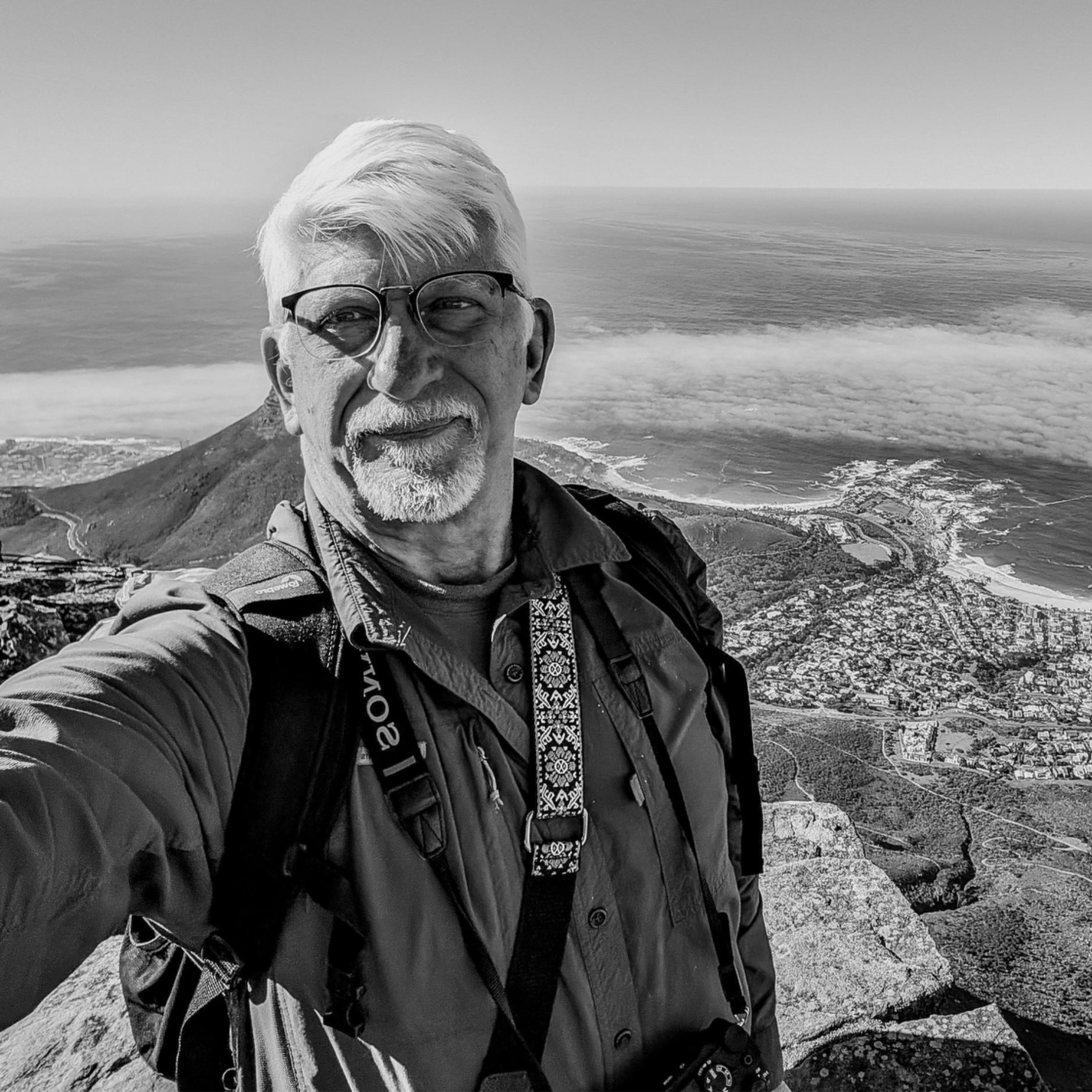
South Africa, Romans 13, and learning to read Scripture from somewhere

I went to South Africa carrying questions that have been following me for a long time, though Palestine has certainly given them more urgency. Questions about the church and power. About what happens when theology grows too comfortable with the political order around it. About the difference between peacemaking that actually confronts injustice and a kind of reconciliation language that asks everyone to get along without looking too closely at why some people have so much more power than others.
I wanted to listen to people who had lived through apartheid, and to those still living with its consequences. Not because South Africa offers some neat analogy for Palestine. It doesn’t. But because South Africans have already wrestled deeply with questions that much of the church elsewhere still seems reluctant to ask.

The Place From Which We Read
One of the more important afternoons came at the University of the Western Cape with our new friend, theologian Dr. Thandi Gamedze. We spent several hours looking closely at the 1985 South African Kairos Document, its relationship to the Palestinian Kairos document written decades later, and especially its distinctions between State Theology, Church Theology, and Prophetic Theology.
State Theology uses Scripture and Christian language to legitimize the existing political order. Church Theology sounds much kinder. It speaks about peace, reconciliation, forgiveness and unity, but often without adequately naming the injustice that has made reconciliation necessary in the first place. Prophetic Theology begins somewhere else. It asks what is actually happening, why it is happening, who is suffering because of it, and what faithfulness requires from the church in response.
Then we got to Romans 13: “Let everyone be subject to the governing authorities.”
I have read those words all my life. I have preached from Romans, studied Paul, sat through Bible studies and seminary classes, and yet I’m increasingly aware that I have almost always read that passage from a very particular place. I’m white. I’m American. I grew up evangelical, even if I’ve largely jettisoned that word as a description of where I am now. And for most of my life the structures around me have worked reasonably well for people like me. Nobody has stood against my people or told me where I could live, which road I could use, which neighborhood I could enter, or whether I had permission to walk across a particular piece of this earth. I have generally assumed that if I wanted to go somewhere, I could go.
That matters when we open a Bible.
One of the things South Africa kept pressing on me is that there is no such thing as reading Scripture from nowhere. We all stand somewhere when we read. Our social location, our history, our race, our experience of power or powerlessness, and the people sitting beside us all affect what we hear and what we fail to hear. That does not mean the text simply means whatever we want it to mean. Quite the opposite. Good work with Scripture requires the humility to recognize what we are bringing to the text and enough curiosity to listen to how that same text sounds when it is read from a place radically different from our own.
Privilege has a way of disguising itself as neutrality.
Romans 13 sounds one way when the government has mostly protected you. It sounds very different when the police have removed your family from its home, when the law decides where you may live, when your movement is controlled, when your people have been classified and dispossessed, or when the state tells you that your suffering is legal. Suddenly the question is not simply, “Does the Bible tell Christians to obey the government?” The question becomes what Paul was actually saying to a vulnerable community living under Rome, and how those few verses belong alongside the Exodus, the prophets, Jesus confronting political and religious power, Peter saying, “We must obey God rather than human beings,” and Paul himself repeatedly ending up in prison.
A hermeneutic that isolates a few verses from all of that can do real damage.
And that was part of what made the Kairos conversation so unsettling. State Theology did not necessarily throw the Bible away. It used the Bible. Church Theology could quote Scripture too, sincerely calling for peace and reconciliation and forgiveness. The question was not simply who believed the Bible and who did not. The deeper question was how the Bible was being read, from where, in whose interests, and with what consequences.
I can look back now at the use of Romans 13 under apartheid and think, of course that was a terrible reading. The much less comfortable question is what I cannot yet see about my own readings. What have I assumed because I have usually encountered Scripture from the safer side of power? What might Palestinian Christians hear in these texts that I did not hear because nobody ever prevented me from walking down my own street? What does the Bible sound like from behind a checkpoint, from a refugee camp, or while looking across at land your family once farmed but can no longer reach?
Beauty, Land, and Memory
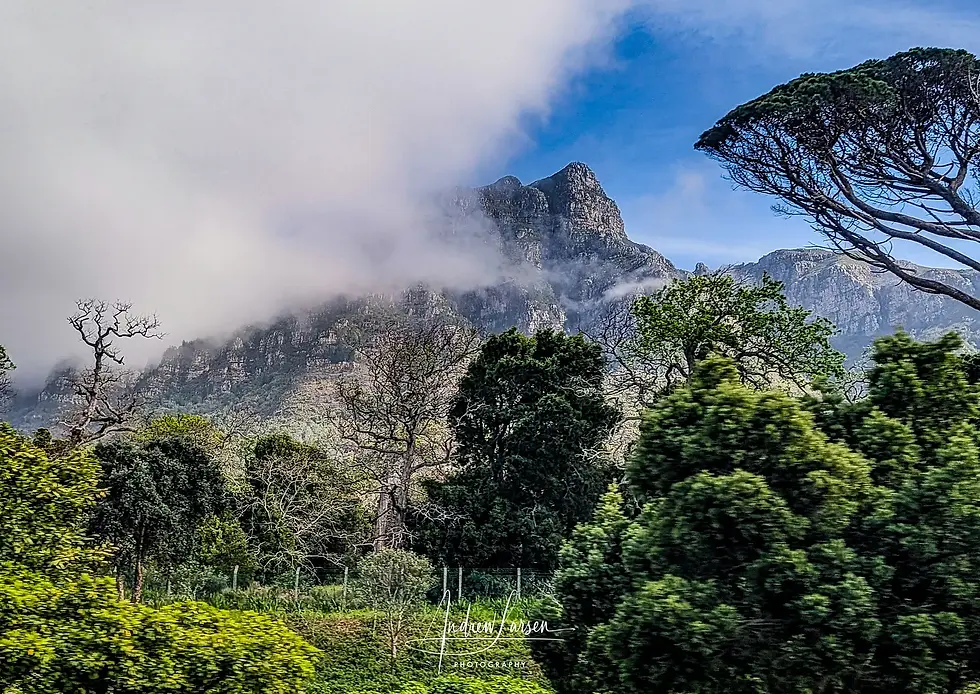
All of that is somewhere behind these photographs, even though many of them are simply beautiful. And South Africa is almost offensively beautiful in places. Mountains disappearing into clouds. Ocean and sky. Vineyards tucked into folds of land. Baboons wandering through Volmoed as though they own the place—which, come to think of it, raises another question about ownership.

But after a little time there, it becomes difficult to look at the beauty of the land without thinking about the land itself. Who has belonged to it? Who was removed from it? Who owns it now? Who has access to its neighborhoods, farms, beaches and extraordinary views, and who continues to live with decisions made generations ago?
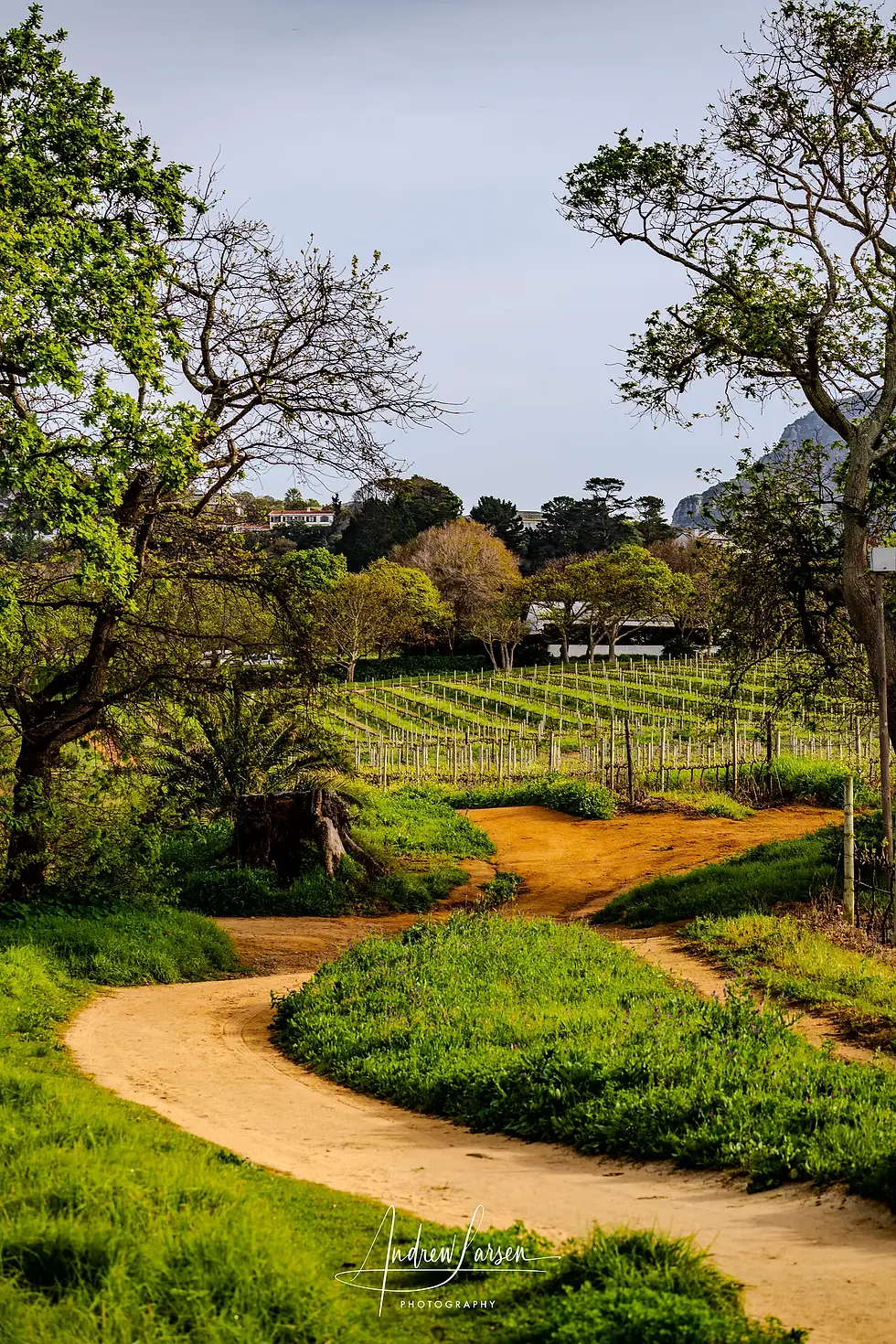
The past has not exactly passed. Apartheid is over, but history has settled into geography, economics, neighborhoods, memory, and the very different places from which people still experience the country.
That tension followed us everywhere. Museums told one part of the story, carefully preserved in photographs, quotations and artifacts. Then we would step outside and the streets, townships, conversations and landscapes were telling another part of the story in the present tense. The past was not simply behind us. It was underfoot.
Palestine on the Walls
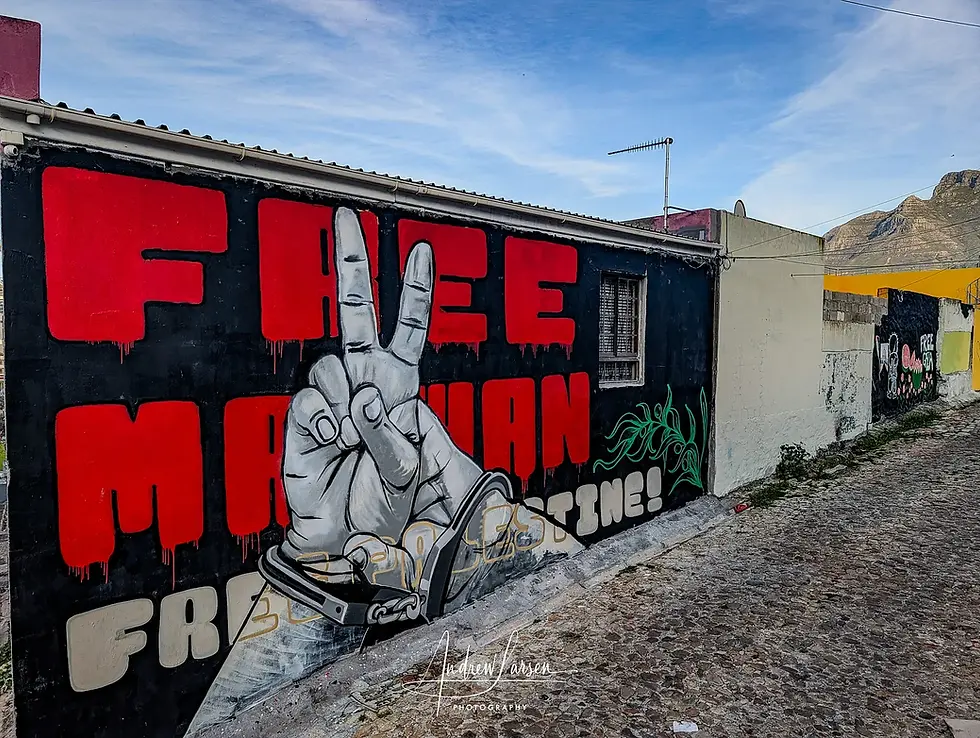
The connection to Palestine was not confined to our classroom conversations either. It was visible throughout Cape Town, and perhaps nowhere more clearly than in the Bo-Kaap. Murals, Palestinian flags, painted calls for freedom, peace and justice, and tributes to Palestine’s fight and cause appeared again and again on walls and buildings.
Palestine was part of the public landscape.
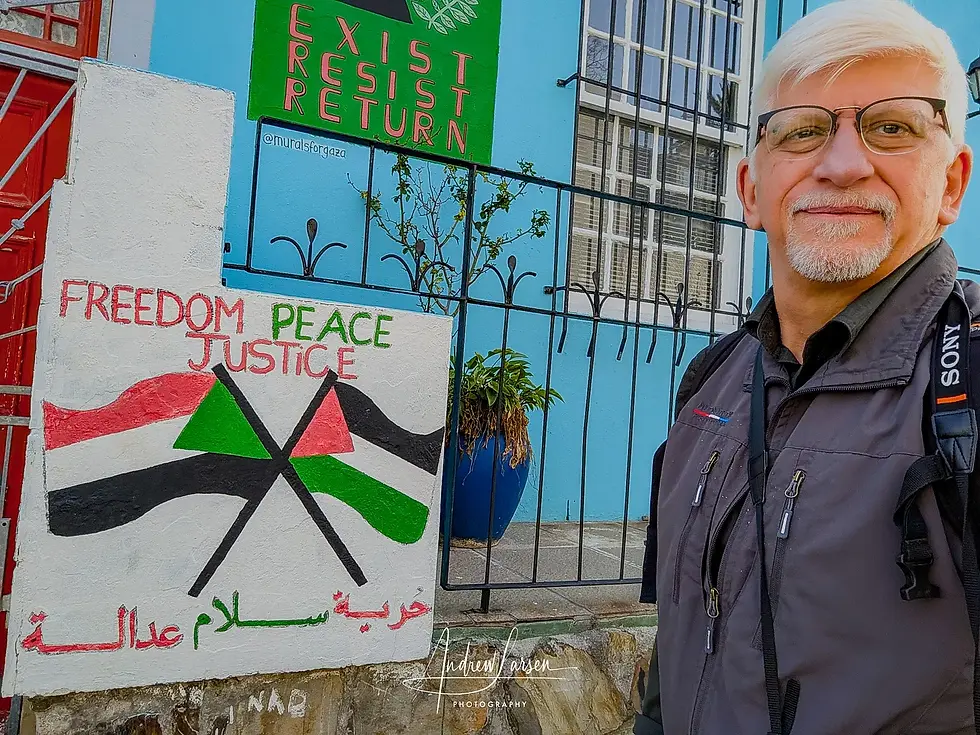
That affected me. I had come carrying Palestine with me, but I kept discovering that South Africans were already carrying it themselves. The connection was not something I had imported into the trip. It was already there—in conversations, in theology, in public art, in solidarity movements, and in the memory of people whose own history includes forced removals, racial classification, restricted movement and a political system that once seemed permanent.
Whatever differences there are between South Africa and Palestine—and they are important—the resonance is not something outsiders invented. South Africans themselves have been naming it for years.
There was another reason South Africa had been living in my imagination long before this trip. On several of my visits to Bethlehem, often for the Christ at the Checkpoint conference, there has been a delegation from South Africa. They came to stand in solidarity with Palestinians, but also, I think, to bring perspective. They knew something about systems that declare themselves permanent. They knew something about laws, borders, land, racial hierarchy, theology and state power.
And simply by being there, they seemed to raise a possibility that can be difficult to imagine when you are standing beneath the separation wall or waiting at a checkpoint: perhaps what appears permanent is not permanent after all.
That is not to romanticize South Africa. Spending time there made it impossible to imagine apartheid simply ended and everyone lived happily ever after. The wound remains. Enormous inequality remains. The consequences of dispossession remain. Freedom did not magically repair the land or redistribute all that had been taken.
But something that once seemed fixed, legally protected, theologically defended and enforced by overwhelming state power did end.
I think that matters.

The Wake Follows the Boat
One of these photographs is simply the wake of our ferry returning from Robben Island. I keep coming back to it, partly because the metaphor is almost embarrassingly obvious. We were leaving the island behind, Cape Town appearing again in the distance, but of course the history did not remain on the island.
The wake followed the boat.
History does that. We move forward, but what happened behind us continues to disturb the water. The consequences travel with us. They settle into land and wealth and neighborhoods and institutions, and sometimes into the way we read our Bibles.
Maybe that begins to answer why I went to South Africa. I wanted to understand more deeply what it means to stand in solidarity at the wound, but also what it means to read Scripture there. I wanted to become more conscious of the place from which I have been reading all my life, and to listen alongside people whose experience of land, government, power and the Bible is very different from my own.
And I wanted to understand why South Africans had kept showing up in Bethlehem.
I think I understand that a little better now. They were not coming because South Africa had solved everything. They were coming because they knew that injustice can become so thoroughly embedded in law, theology, economics and geography that it begins to feel like the natural order of things.
They also knew that it wasn’t.
Standing in Bethlehem, their presence carried a kind of testimony: we have seen something called permanent come to an end.
Maybe Palestine will too.
*Interested in joining us in 2027 for a travel-study experience?
visit - ssu.ca/travel-study-experiences
Subscribe to Andy's Substack - Blessed are the Peacemakers
Andy and Cari Conklin-Larsen are peacemakers devoted to engaging their “other” as followers of Jesus Christ, believing this is a core characteristic of true disciples of Jesus. Andy uses his camera to build bridges of understanding between groups and to decrease social distance. His photography has appeared in the National Geographic, Christianity Today, and many other publications. He has also appeared multiple times on local television and radio programs sharing about peacemaking with Muslim communities and peacemaking in the Israeli-Palestinian conflict. In 2011 he was involved for three months in the city of Hebron in the Palestinian West Bank with EAPPI (Ecumenical Accompaniment Program for Palestine and Israel). In the summer of 2022 Andy joined a group of Shia Muslim pilgrims on Ziyarah pilgrimage to Iraq to understand up close the spiritual journey of his friends. The group also met with the Ayatollah Sistani in his home in Najaf. Andy has served with the Evangelical Covenant Church (ECC) since 1988, living in Mexico, Spain, the Middle East and the U.S. in ministries of pastoring, peacemaking, leadership, discipleship, mission and outreach, church planting, and reconciliation. Cari is a community organizer and software engineer who has worked extensively in refugee resettlement, co-founding with a Muslim woman the important “Welcome Home Refugees” to help support and build community around recent immigrants.
Andy and Cari spend much time facilitating encounters with their “other” across the country and in the Middle East, helping disparate communities build relational bridges of understanding, and their greatest passion is to hang out with Muslim friends and get people out of the pew, or off their prayer rug as the case may be, and into relationships with their “other.”